
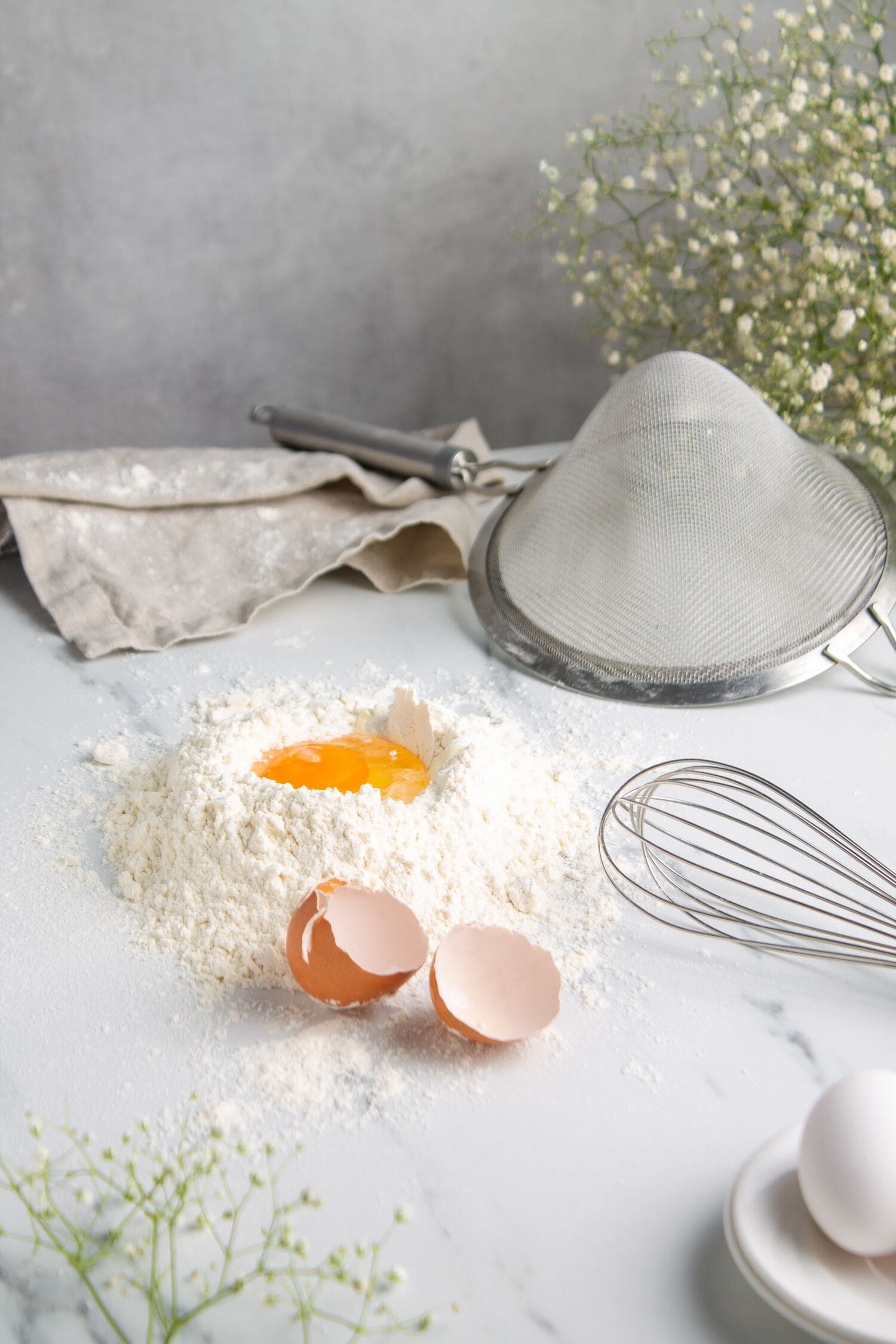
Flour – plain
Flour is a fine, powdery substance that is made by grinding grains, seeds, or roots. The most commonly used types of flour are wheat flour, which is made from grinding wheat kernels, and all-purpose flour is a wheat flour mix that may be used for a range of culinary and baking uses.
What is all-purpose flour?
White flour is a processed and refined wheat flour that has removed the germ and bran from the wheat kernel, keeping just the starchy endosperm. This process of refining removes many of the nutrients, including fiber, vitamins, and minerals, that are found in whole wheat flour.
White flour is commonly used in many baked goods and other food products, as it has a finer texture and lighter color than whole wheat flour, and it can help create a more tender crumb in bread and cakes. However, because of its lack of fiber and other nutrients, white flour is generally considered to be less healthy than whole wheat flour.
It’s worth noting that not all white flour is the same – some types of white flour are enriched with vitamins and minerals to help restore some of the nutrients lost during processing. Nonetheless, for a healthier option, whole wheat flour, which contains the entire wheat kernel and is rich in fiber and other nutrients, is a better choice.
How flour is made?
White flour is made from wheat grains that have been processed to remove the bran and germ, leaving only the starchy endosperm. The process of making white flour typically involves several steps:
- Cleaning: The wheat grains are cleaned to remove any foreign materials, such as dirt, rocks, or straw.
- Tempering: The wheat grains are soaked in water to soften them and make them easier to the mill.
- Milling: The wheat grains are ground into flour using a combination of rollers and sifters. The first step of milling breaks the wheat berries into smaller particles, while the subsequent steps grind the particles into finer and finer particles. The bran and germ are removed during the milling process, leaving only the endosperm.
- Refining: The endosperm is refined further to remove any remaining traces of bran and germ, leaving a fine white powder.
- Bleaching: Some types of white flour are bleached using chemicals such as chlorine dioxide or benzoyl peroxide to give them a white color and improve their texture.
- Enriching: To compensate for the loss of nutrients during the refining process, many countries require that white flour be enriched with certain vitamins and minerals, such as iron, thiamin, riboflavin, niacin, and folic acid.
- Packaging: The white flour is packaged in bags or containers and shipped to stores and consumers.
The specific process used to make white flour can vary depending on the manufacturer and the country, but these are the general steps involved in making white flour from wheat grains.
What is the use of flour?
Flour is a versatile ingredient that can be used in a wide variety of ways in cooking and baking. Here are some common uses for flour:
- Baking: Flour is the main ingredient in many baked goods, such as bread, cakes, cookies, and pastries.
- Thickening: Flour can be used as a thickening agent in sauces, gravies, soups, and stews. To use flour as a thickener, mix it with a small amount of cold liquid to make a paste, and then whisk the paste into the hot liquid.
- Coating: Flour can be used as a coating for meat, fish, or vegetables before frying or sautéing. This helps to create a crispy exterior and seals in moisture.
- Binding: Flour can be used as a binding agent in recipes that call for meatloaf, meatballs, or veggie burgers.
- Dusting: Flour can be used to dust surfaces when rolling out dough or shaping bread.
- Topping: Flour can be used as a topping for casseroles or gratins, such as macaroni and cheese or shepherd’s pie.
There are many types of flour, including all-purpose flour, whole wheat flour, cake flour, bread flour, and more. The type of flour used in a recipe can affect the texture, flavor, and nutritional content of the finished product, so it’s important to choose the right type of flour for each recipe.
Flour Nutrients
The nutrient content of flour can vary depending on the type of flour and the milling and refining process used. In general, whole wheat flour is a more nutrient-dense option compared to white flour, as it contains the entire grain, including the bran and germ, which are rich in fiber, vitamins, and minerals. Here is a general overview of the nutrient value of different types of flour:
| Calories | Carbohydrates | Fiber | Protein | Fat |
|---|---|---|---|---|
| 364 | 76 g | 2 g | 10 g | 1 g |
Vitamins and minerals: may be enriched with vitamins and minerals, such as iron, thiamine, riboflavin, and niacin, but still contains fewer nutrients compared to whole wheat flour.
Other types of flour, such as almond flour, coconut flour, and corn flour, also have different nutrient values. For example, almond flour is high in protein and healthy fats, while coconut flour is high in fiber and low in carbohydrates. It’s important to check the nutrient content of the specific type of flour you are using to determine its nutrient value.
What are the benefits of flour?
Flour can provide several benefits when used in moderation as part of a balanced diet. Here are some potential benefits of flour:
- Provides energy: Flour is a source of carbohydrates, which are the body’s main source of energy. Consuming flour as part of a balanced diet can help provide the energy needed to fuel physical activity and other daily activities.
- Nutrient content: Depending on the type of flour, it may contain important nutrients such as fiber, protein, vitamins, and minerals. Whole wheat flour, for example, is higher in fiber, iron, and B vitamins than refined white flour.
- Digestive health: The fiber in whole grain flour can promote digestive health by promoting regular bowel movements and helping to reduce the risk of constipation.
- Weight management: Consuming foods made with flour can help promote feelings of fullness and satisfaction, which may help to reduce overall calorie intake and support weight management.
- Versatility: Flour is a versatile ingredient that can be used in a wide range of recipes and cooking techniques, making it a useful ingredient for home cooks and professional chefs alike.
It’s important to note that the nutritional value of flour can vary widely depending on the type of flour and how it’s processed. Additionally, some people may have sensitivities or allergies to certain types of flour, such as gluten-containing wheat flour. As with any food, it’s important to consume flour in moderation as part of a balanced diet that includes a variety of other nutrient-rich foods.
The History of Flour
The history of flour dates back thousands of years to ancient civilizations, where grains were ground into flour for use in bread and other baked goods. The first evidence of flour milling comes from ancient Egypt, where grain was ground into flour using saddle stones as early as 8000 BCE.
Over time, various methods of milling and refining flour were developed in different parts of the world. In Europe, water-powered mills were developed in the Middle Ages, which allowed for more efficient and larger-scale production of flour. In the 19th century, roller mills were developed, which used metal rollers to grind the wheat more finely and remove more of the bran and germ, resulting in a whiter, finer flour.
In the United States, flour milling became a major industry in the 1800s, with the invention of the steel roller mill and other modern milling technologies. This led to the mass production of white flour, which became a staple in American households.
Today, flour is still a widely used ingredient in cooking and baking around the world. However, there is growing interest in whole grain flour, which retains more of the nutrients found in the whole grain and is considered healthier than highly refined white flour. Additionally, alternative flours made from grains like spelt, quinoa, and amaranth, as well as from nuts and seeds, have become increasingly popular in recent years.
The origin of the word ‘flour’
The word “flour” comes from the Old French word “flor,” which originally referred to the finest part of meal or grain. The Old French word “flor” derived from the Latin word “flos,” meaning “flower” or “blossom.” This is because the earliest forms of flour were produced by grinding grains between stones to create a fine powder that resembled flower petals.
The word “flour” has been used in English since the 13th century and originally referred specifically to wheat flour. Over time, the word has come to refer to other types of milled grains as well, such as rye flour, corn flour, and oat flour. Today, flour is a common ingredient in many cuisines around the world and is used in a wide variety of baked goods, pasta, and other dishes.
What’s the flour converter?
A flour converter is a tool that helps convert different types of flour between weight and volume measurements. This is useful when you have a recipe that uses weight measurements for flour (in grams, ounces, or pounds), but you only have measuring cups or vice versa.
Here’s an example of how to convert 1 cup of all-purpose flour (in volume) to grams (in weight):
First, check the density of the flour you are using. All-purpose flour has a density of approximately 125 grams per cup.
Multiply the volume measurement (1 cup) by the density (125 grams per cup):
1 cup x 125 g/cup = 125 grams
Therefore, 1 cup of all-purpose flour is equivalent to 125 grams of all-purpose flour.
If you want to convert grams of flour to cups, you can use the same formula but rearrange it to solve for volume:
Divide the weight measurement (in grams) by the density (in grams per cup):
Weight (g) / Density (g/cup) = Volume (cups)
For example, if you have 250 grams of all-purpose flour and want to know how many cups that is:
250 g / 125 g/cup = 2 cups
Keep in mind that the density of different types of flour can vary, so it’s important to check the density of the specific type of flour you are using. Additionally, it’s generally more accurate to measure flour by weight rather than volume, as the density of flour can vary based on factors such as humidity and how the flour is packed into the measuring cup.