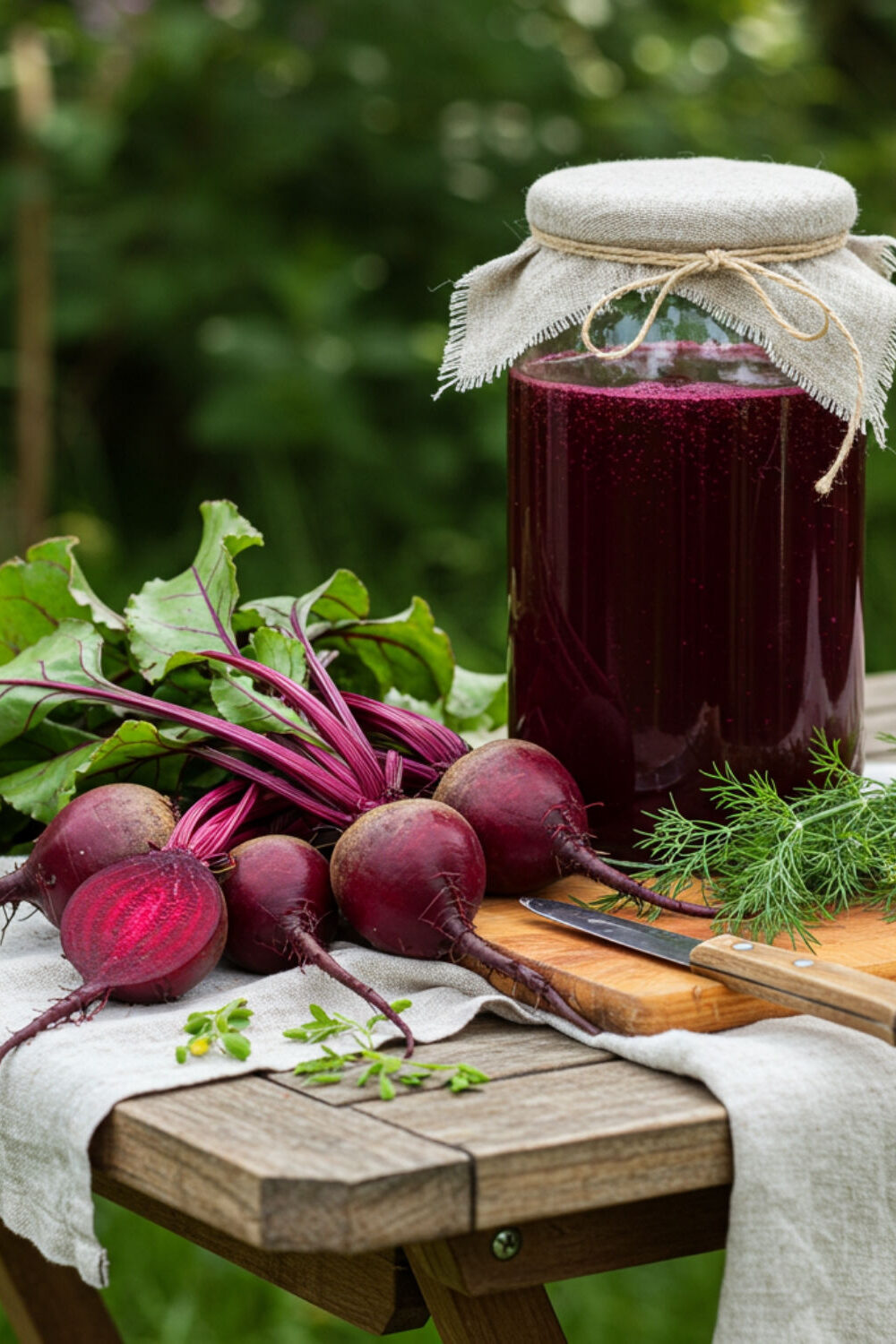

With its tangy taste and natural health benefits, beet kvass has been treasured for generations as both a refreshing drink and a kitchen staple. This vibrant, probiotic-rich tonic has been enjoyed in Eastern Europe for centuries, not only as a base for soups like borscht, but also as a refreshing and healthy beverage on its own. In this guide, you’ll find out why beet kvass deserves a spot in your kitchen and discover a simple Beet Kvass recipe you can try at home.
Making beet kvass at home is simple, inexpensive, and requires only a handful of natural ingredients. Quick note, some people also like to add black pepper or caraway seeds for extra flavour, but if it’s your first time making beet kvass, it’s best to start with the traditional basics.
Ingredients
- 1kg fresh beets
- 1 liter boiled and cooled water
- 1 tablespoon sea salt
- 4 large garlic cloves
- 5 allspice berries
- 3 bay leaves
Homemade Beet Kvass Recipe
- Wash the beets thoroughly (no need to peel) and cut them into quarters or even better slices.
- Place the beets in a large glass jar, layering with garlic, bay leaves, and allspice.
- Dissolve the salt in the cooled water and pour over the beets until fully covered.
- Cover the jar with a clean cloth or gauze and leave it in a warm place for 5-7 days.
- Once fermentation begins, you’ll notice bubbles and a pleasant tangy aroma – this means your kvass is working.
- Once you’re sure the kvass has fermented properly and no mold has developed, strain the liquid through a sieve, pour it into bottles, and store in the fridge. The fermented beets themselves can be reused in soups or salads.
Your homemade kvass will be tangy, slightly sour, and wonderfully refreshing.
Storage and Shelf Life of Beet Kvass Recipe
Because beet kvass is a living, fermented product, proper storage is key. Keep it in sealed glass bottles or jars in the fridge. The cool temperature slows down fermentation and keeps it fresh and healthy for longer.
Signs your kvass has gone bad include mold, unpleasant odors, slimy texture, or a bitter off-flavor. A healthy beet kvass recipe should smell slightly sour, taste tangy but pleasant, and have a deep color.
How to Tell if Beet Kvass Recipe Has Gone Bad
Since beet kvass is a living, fermented drink, it’s important to know the difference between healthy fermentation and spoilage. A good kvass should smell pleasantly earthy and slightly sour, with a deep beet flavor. If you notice any of the following signs, it’s best to throw it out:
- Mold – white, black, green, or blue patches on the surface mean the kvass is no longer safe.
- Unpleasant odor – if it smells musty, rotten, or alcoholic instead of fresh and tangy, it has spoiled.
- Bitter or off taste – kvass should taste earthy, lightly sour, and refreshing. A bitter, rotten, or unpleasant flavor means it’s gone bad.
- Slimy texture – if the liquid turns sticky, gooey, or overly thick, it’s a sign of harmful bacterial growth.
A healthy kvass should always taste refreshing, tangy, and slightly salty, with a clean beet aroma. When in doubt, it’s safer to discard it and start a fresh batch.
Why Beet Kvass Recipe Is So Healthy
This traditional Beet Kvass recipe is more than just a flavorful drink, it’s also incredibly healthy. Like sauerkraut and other fermented foods, it’s packed with probiotics that support digestion and gut health. Thanks to the lactic acid fermentation process, it also contains beneficial enzymes, vitamins, and minerals from the beets.
The drink is known to:
- support the immune system,
- aid in detoxification,
- help maintain a healthy gut microbiome,
- improve stamina and recovery.
Red beet varieties give the kvass a deep ruby color, while golden beets make for a lighter, milder version. Both are equally healthy and delicious.
When and How to Drink Beet Kvass
Beet kvass can be enjoyed any time of day, but many people prefer drinking a small glass in the morning on an empty stomach or 30 minutes before a meal. Start with about 120 ml per day and see how your body reacts.
It’s best served chilled, though you can also bring it to room temperature, just don’t boil it, as high heat destroys its healthy probiotics.
Creative Ways to Use Beet Kvass Recipe in the Kitchen
A Beet Kvass recipe isn’t just for borscht, its vibrant color and tangy, earthy flavor make it a unique addition to all kinds of dishes. Here are some delicious ways to use it:
- Holiday borscht
The most classic use, kvass gives borscht its deep red color and rich, full-bodied taste. - Cold beet soup
Chilled kvass makes a refreshing base for summer soups. - Beet cream soup
Adding a splash of kvass enhances the flavor and adds a pleasant touch of acidity. - Ukrainian borscht
A little kvass brings out a more intense, layered flavor. - Chocolate beet cake
A few spoonfuls of kvass deepen the color and aroma of the cake. - Salad dressing
Whisk kvass with olive oil, mustard, and honey for a zesty, healthy dressing. - Smoothies and juices
Just a few tablespoons enrich both vegetable and fruit blends. - Homemade bread
Kvass in bread dough gives it a subtle tang and rustic character. - Meat marinades
Its natural acidity tenderizes meat and boosts flavor. - Fermenting base
Use kvass to kick-start fermentation of other vegetables like carrots, cabbage, cauliflower, cucumbers, or radishes. - Sauce for fish or roasted vegetables
Kvass adds brightness and depth to baked dishes.
These are just a few ideas. The truth is, beet kvass is incredibly versatile, and once you start experimenting, you’ll find endless ways to use it in both traditional and modern recipes. Its bright colour and tangy taste make it a natural flavour booster in both sweet and savoury recipes.
Beyond cooking, beet kvass can even be used as a natural fabric dye or an eco-friendly Easter egg colourant. Some gardeners use it as a mild fertiliser for acid-loving plants, and artists love its use as a natural pigment in homemade paints.
Who Should Avoid Beet Kvass?
While beet kvass is generally healthy, there are some exceptions. People with digestive sensitivities, acid reflux, or certain food intolerances should consume it carefully. Those with diabetes or insulin resistance should also monitor their intake, as beets naturally contain sugars that ferment into lactic acid. If in doubt, it’s always best to consult a doctor before adding fermented drinks to your diet.
Beet kvass is a timeless drink that combines rich flavor with impressive health benefits. Whether you enjoy it as a morning tonic, a base for soups, or a unique ingredient in cooking, it’s a wonderful way to bring traditional fermentation into your kitchen. If you haven’t tried it yet, now is the perfect time to prepare your own using this simple Beet Kvass recipe and enjoy a naturally healthy boost every day.