
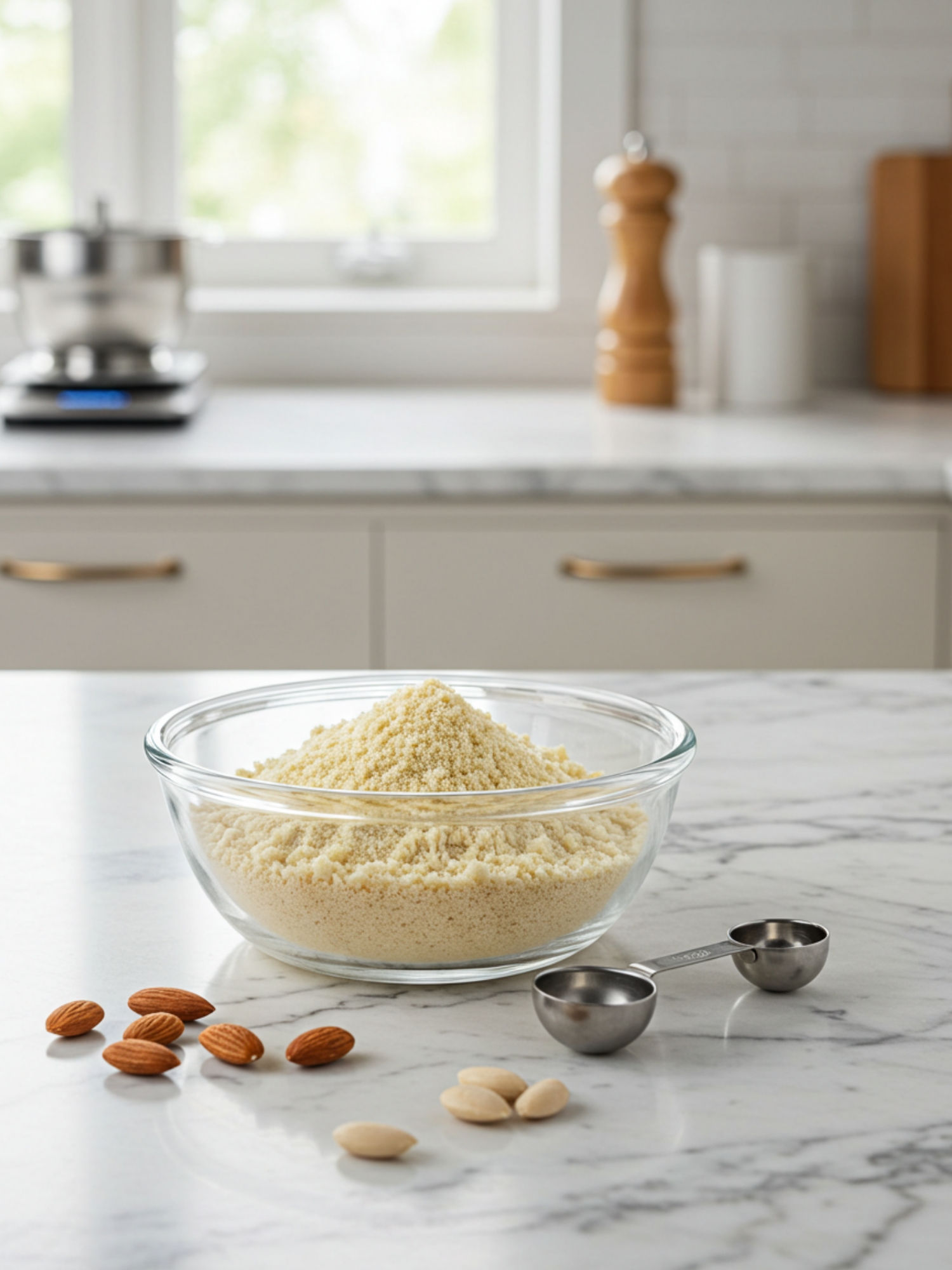
Almond Flour
Almond Flour Conversion Guide
When baking or cooking, precise ingredient measurements are crucial—especially for almond flour, which can vary in density compared to traditional wheat flour. That’s why we’ve provided a simple converter tool at the top of this page—just enter your desired measurement and instantly see the equivalent in grams, cups, tablespoons, teaspoons, or ounces. Still, for quick reference, here’s a handy conversion table to help you measure almond flour accurately.
| Measurement | Grams (g) | Ounces (oz) |
| 1 cup | 96 | 3.4 |
| 3/4 cup | 72 | 2.5 |
| 1/2 cup | 48 | 1.7 |
| 1/3 cup | 32 | 1.1 |
| 1/4 cup | 24 | 0.85 |
| 1 tablespoon | 6 | 0.21 |
| 1 teaspoon | 2 | 0.07 |
Note: These conversions are approximate and can vary slightly based on how packed the flour is.
What is Almond Flour?
Almond flour is a finely ground powder made from blanched almonds-almonds that have had their skins removed. It is a popular gluten-free and low-carb alternative to traditional wheat flour, often used in baking recipes for cakes, cookies, and bread, as well as in coatings and crusts.
Almond flour has a naturally sweet, nutty flavor and a moist texture that contributes to tender baked goods. Because it contains healthy fats, proteins, and fiber, it is also valued for its nutritional benefits.
Nutritional Highlights of Almond Flour (per 1/4 cup or ~24g)
- Calories: 150
- Protein: 6 g
- Fat: 14 g (mostly unsaturated)
- Carbohydrates: 6 g
- Fiber: 3 g
- Sugars: 1 g
- Vitamin E: 25% of daily recommended intake
- Magnesium: 20% of daily recommended intake
Uses and Benefits
- Gluten-Free Baking: Ideal for people with gluten intolerance or celiac disease.
- Low-Carb & Keto: Fits well into low-carb or ketogenic diets due to its low net carbs.
- Rich in Nutrients: Provides healthy fats, fiber, and essential vitamins and minerals.
- Moisture Retention: Helps baked goods stay moist and tender.
Tips for Baking with Almond Flour
- Almond flour can make baked goods denser, so recipes often combine it with eggs or other binders.
- Because it lacks gluten, rising agents like baking powder or baking soda are crucial for leavening.
- Store almond flour in an airtight container in the fridge or freezer to prevent rancidity.
Almond Flour in Keto and Paleo Diets
Almond flour is a pantry staple for anyone following a keto or paleo lifestyle. Its low carbohydrate content and high fat-to-carb ratio make it perfectly suited for ketogenic diets, where minimizing carbs is essential to stay in ketosis. With just 2 grams of net carbs per 1/4 cup, almond flour is used to recreate low-carb versions of bread, pancakes, cookies, and more-without spiking blood sugar levels.
For those on a paleo diet, which excludes grains, legumes, and processed foods, almond flour serves as an ideal grain-free flour alternative. Since it’s made purely from ground blanched almonds, it aligns with the paleo focus on whole, nutrient-dense ingredients. It’s especially popular in paleo baking for creating textures and flavors similar to traditional baked goods, all while sticking to ancestral eating principles.
Whether you’re crafting keto fat bombs or paleo banana muffins, almond flour offers the versatility, nutrition, and texture that support both lifestyles without compromise.
Fun Facts About Almond Flour
- Almond flour dates back centuries as a staple in Middle Eastern and Mediterranean cuisines.
- It is a key ingredient in classic French macarons and marzipan.
- Almonds are one of the most nutrient-dense nuts, and their flour retains many of these benefits.
- Almond flour is naturally grain-free and paleo-friendly.